Origins and Escalation
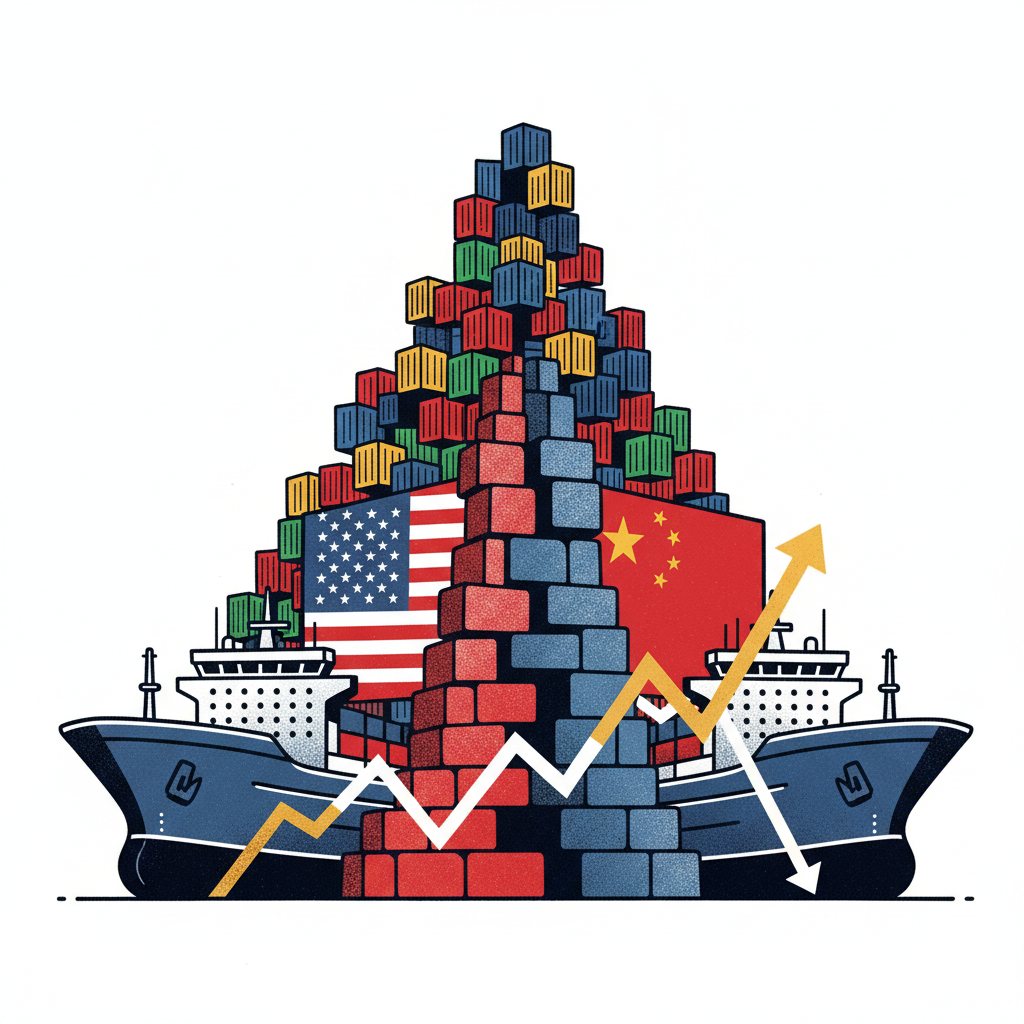
The "trade war" formally commenced in 2018 when the United States, under President Donald Trump, began imposing significant tariffs on a wide range of Chinese imports, citing unfair trade practices, intellectual property theft, and forced technology transfers. China retaliated with its own tariffs on American goods. This marked a departure from previous periods of globalized trade, where disputes were typically handled through the World Trade Organization. The conflict involved several rounds of tariff increases, impacting billions of dollars worth of goods and causing significant supply chain disruptions globally.
Current Geopolitical Situation
Today, the trade war's influence, though perhaps less overtly aggressive than its peak, remains a critical component of US-China relations. The current influence score for this geopolitical dynamic stands at 26/100, indicating a persistent, albeit moderated, level of global impact. Geopolitical intelligence tracking highlights the continuing analytical focus, with "Tariffs & Trade" registering 81 tracked signals, followed by "China" with 38 tracked signals, and "United States" with 14 tracked signals among top connections by signal volume. This data underscores that trade policies and their implications remain a primary area of concern for both nations and the international community.
Persistent Policy and Legal Ramifications
The enduring nature of these trade policies is further evidenced by recent signals from GeoGazet tracking, which recorded 100 total tracked events related to this sphere. Headlines like "Trump’s Replacement Tariffs Will Have Unintended Consequences for USMCA" illustrate how tariff-centric policy thinking continues to shape economic relations, even beyond direct China engagement. Similarly, "Trump's Tariffs, Government Revenue, and the Cost of Living: The Case of Food and the Agricultural Tariff Exemptions" demonstrates the ongoing economic and social impacts within the United States stemming from these trade measures. Legal battles also continue, as indicated by the signal "US appeals court extends block on ruling against Trump's 10% global tariff," revealing a complex and unresolved regulatory landscape years after the initial escalations.
Historical Comparisons and Broader Context
Historically, periods of economic protectionism and trade disputes are not unprecedented. The Smoot-Hawley Tariff Act of 1930, for example, is often cited as a contributing factor to the Great Depression, highlighting the potential for trade barriers to exacerbate global economic instability. The current US-China trade war, however, is distinct in its scale, the interwoven nature of global supply chains, and its context within a broader geopolitical competition encompassing technology, security, and ideological differences. The Biden administration has largely maintained the tariffs, signaling a bipartisan consensus that China's economic practices require a firm response.
What to Watch For Next
Observers should monitor several key areas. The upcoming US presidential election could introduce shifts in trade policy rhetoric or implementation. Developments in critical technology sectors, such as semiconductors and artificial intelligence, will likely continue to be flashpoints for export controls and investment restrictions. Furthermore, any changes in China’s domestic economic policies or its engagement with international trade bodies will be crucial indicators of future directions in this protracted economic competition.