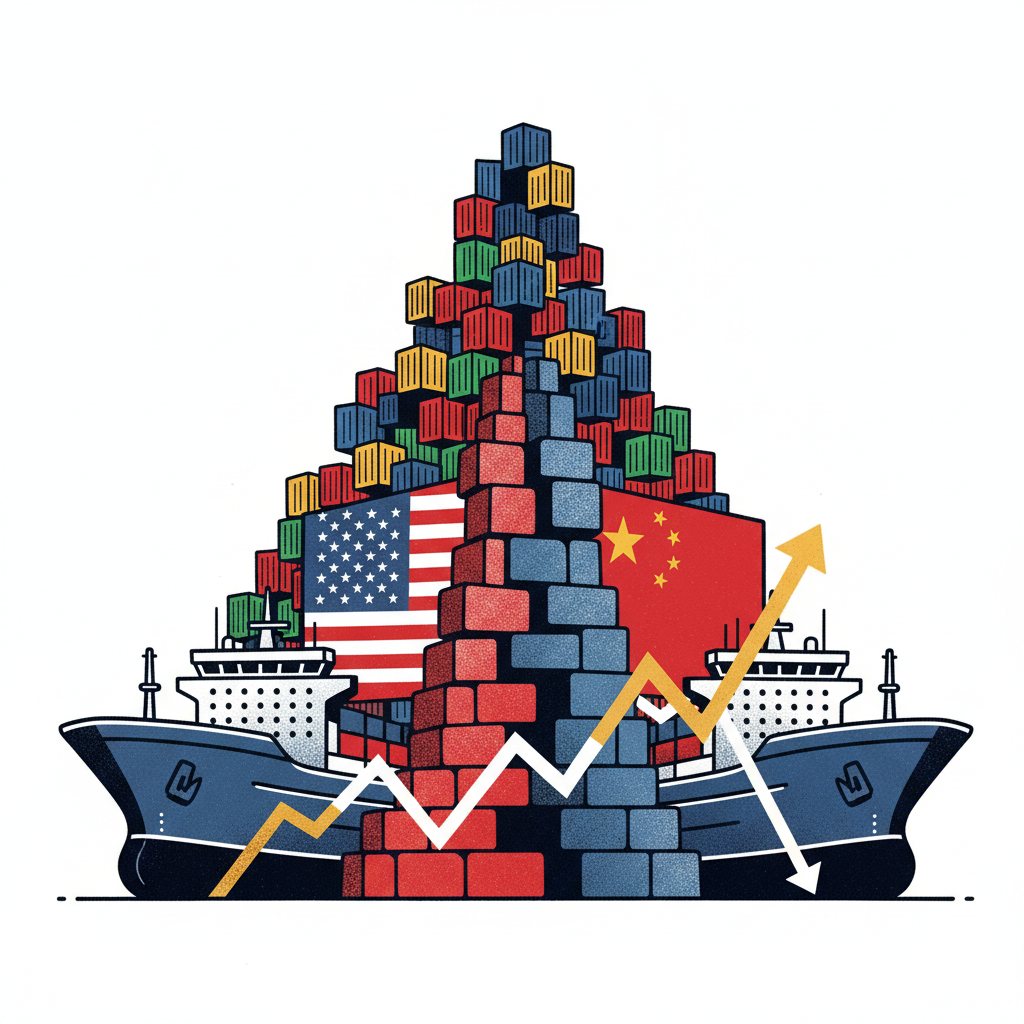
The True Origin of the US-China Trade War
The original US-China trade war commenced in January 2018 with tariffs on solar panels and washing machines, rapidly escalating into broader measures targeting steel and aluminum imports under Section 232 of US trade law. This was followed by significant tariffs under Section 301, specifically aimed at Chinese goods to pressure Beijing on issues such as technology transfer and market access. China retaliated with its own tariffs on US products, leading to a prolonged period of economic friction that impacted global supply chains and markets. This historical context is crucial for understanding any future developments, as the framework for trade disputes between the two economic powers was established well before 2025.
Current Geopolitical Landscape and 2025 Projections
While the trade war did not start in 2025, the geopolitical intelligence landscape indicates a high probability of renewed or intensified trade measures. GeoGazet tracking shows "Tariffs & Trade" as the top connection by signal volume with 81 tracked signals, followed by "China" with 37 and "United States" with 14. This demonstrates persistent interest and activity surrounding these issues. Recent signals, such as "How Trump is relaunching a tariff war citing ‘forced labour’ concerns," directly suggest a potential for new tariff impositions or a significant escalation. The mention of "forced labour" concerns signals a broadening of the justifications for trade actions beyond traditional economic grievances, integrating human rights into the trade policy debate.
The current influence score for the broader US-China dynamic is 17/100, indicating an active but perhaps not acutely critical state at the moment, although this could shift rapidly. The GeoGazet graph shows a total of 100 tracked events, reflecting sustained monitoring of developments. The signal "Trump, G7 split on China strategy" further highlights the international divisions and complexities surrounding approaches to China, suggesting that a unified front on trade or other economic issues remains elusive among major powers.
Economic Implications and International Divisions
The economic impact of renewed trade tensions in 2025 could mirror or exceed those observed in the initial phase. The GeoGazet signal "Footing the Bill for the U.S. Trade War" underscores the reality that such conflicts impose costs on consumers and businesses. Any new tariffs or trade barriers would likely disrupt global supply chains further, potentially leading to increased production costs, higher consumer prices, and slower economic growth for both nations and their trading partners. The divergence in strategy among G7 nations could also complicate efforts to address China’s economic practices collectively, potentially allowing China to exploit these divisions.
Outlook: Factors to Monitor
Looking ahead, several key factors will dictate the trajectory of US-China trade relations in 2025 and beyond. The outcomes of domestic political cycles in both countries, particularly the US presidential election, will be paramount. A shift in administration could either lead to a de-escalation of tensions or, as suggested by recent signals, a significant re-escalation and expansion of protectionist measures. Furthermore, the global economic climate, technological competition, and geopolitical flashpoints, such as Taiwan, will continue to intertwine with trade policy, making the US-China economic relationship a complex and highly dynamic area of geopolitical intelligence. The evolving justifications for trade actions, including human rights concerns, represent a critical area for continued observation.