Historical Context and Escalation
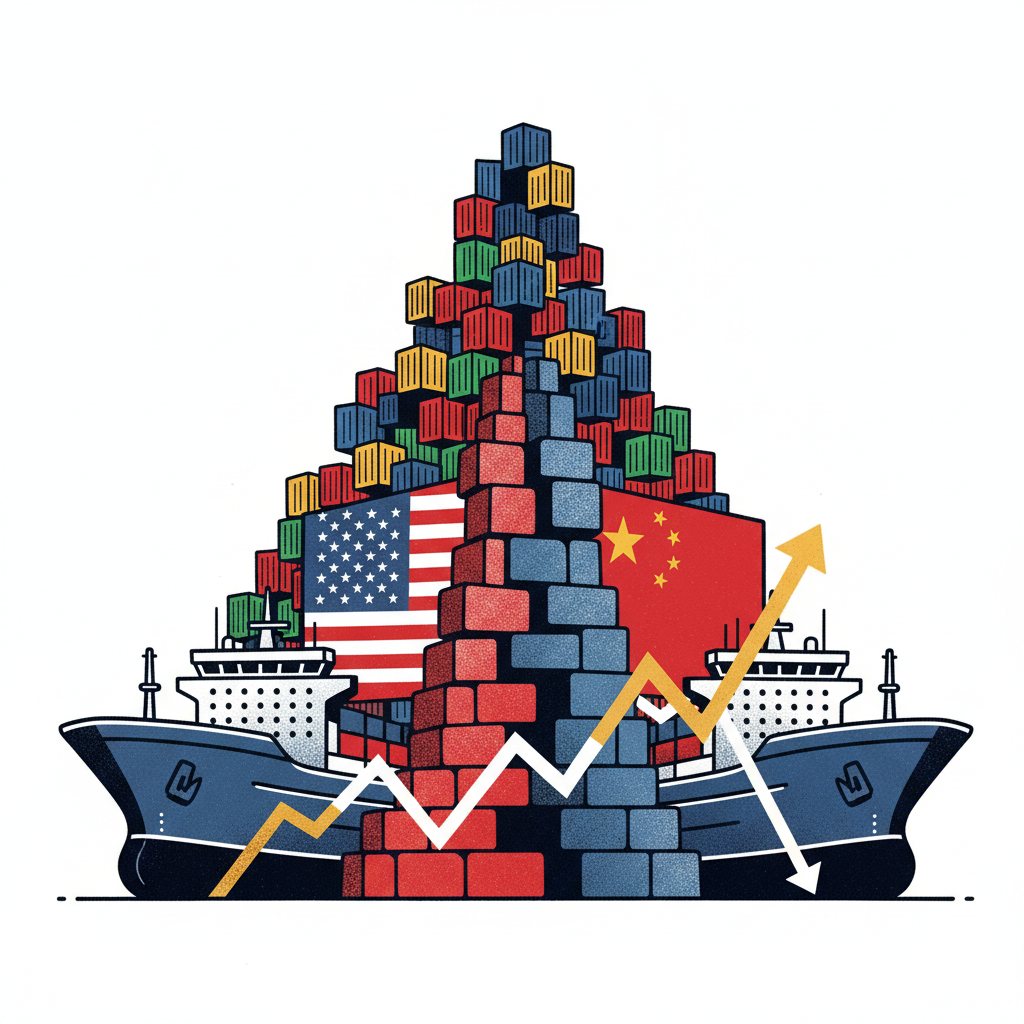
The trade conflict formally began in 2018 when the United States first imposed tariffs on imported steel and aluminum, subsequently escalating to a wide range of Chinese goods. China retaliated with its own duties on US products, creating a cycle of escalating protectionism. This marked a departure from the relatively open trade policies that characterized much of the post-Cold War era, drawing historical parallels to pre-World War II protectionist tendencies, albeit on a different scale and with more complex global interdependencies. The initial rationale centered on compelling China to alter its trade practices, including subsidies, forced technology transfers, and market access restrictions.
Current Landscape and Impact
Despite the implementation of extensive tariffs, their intended effects have been mixed. GeoGazet tracking indicates that "After a Year of High Tariffs, the US Goods Trade Deficit Has Barely Budged," suggesting the tariffs have not substantially narrowed the overall trade gap between the two nations. This points to the complex dynamics of global trade, where supply chains often adjust rather than simply redirecting. The current influence score for the topic stands at 24/100, reflecting ongoing, but not acutely crisis-level, attention. Within GeoGazet's monitoring system, "Tariffs & Trade" remains a highly connected topic with 80 tracked signals, significantly outranking "China" (40 signals) and "United States" (14 signals) in terms of signal volume. This underlines the pervasive nature of tariff-related discussions beyond the bilateral US-China context.
Broader Geopolitical Implications
The tariff disputes have had ripple effects across the global economy. Countries reliant on US-China trade have faced increased uncertainty and pressure to realign their own economic strategies. Furthermore, the legal challenges surrounding tariff implementations continue, as evidenced by a recent GeoGazet signal stating, "US Appeals Court Extends Block on Ruling Against Trump's 10% Global Tariff." While this specific ruling pertained to broader global tariffs and not exclusively China, it illustrates the ongoing legal and policy volatility surrounding protectionist measures. The concept of a trade war is also spreading, with GeoGazet signals indicating that "A trade war between the EU and China seems inevitable," signaling a potential for wider geopolitical fragmentation and economic nationalism. This broader trend encompasses a total of 100 tracked events within the GeoGazet graph, highlighting the significant global activity surrounding trade policy.
What to Watch For Next
Future developments will hinge on several factors. Observers should monitor changes in trade policy under current and future US administrations, particularly any review of existing Section 301 tariffs on Chinese goods. The trajectory of global supply chain diversification and reshoring efforts will also be critical indicators of long-term economic shifts. Furthermore, the expansion of trade tensions to other major economic blocs, such as the European Union and China, will dictate the overall stability of the multilateral trading system. The ongoing effectiveness of tariffs in achieving their stated policy goals, such as reducing trade deficits or addressing intellectual property concerns, will also require continuous scrutiny.