Current Geopolitical Context
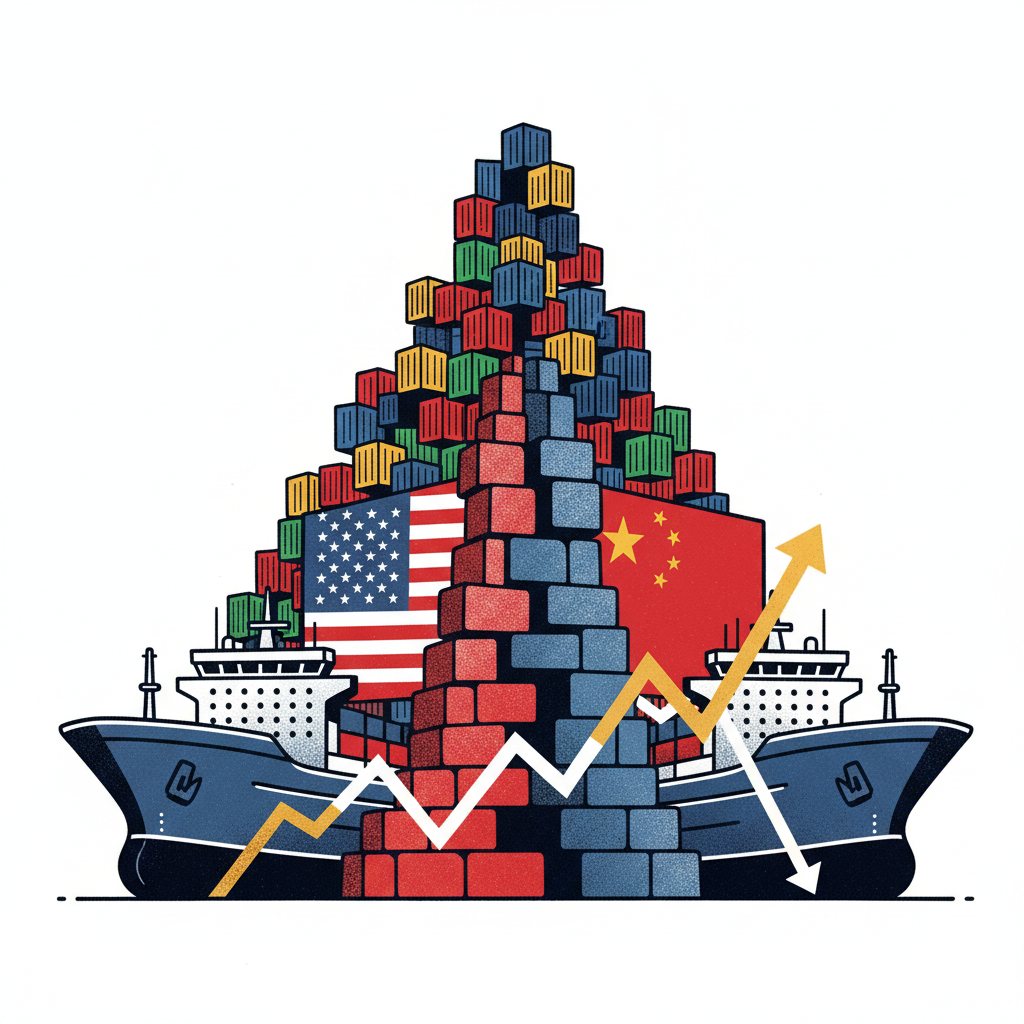
The trade tensions between the United States and China are not merely a series of tariff disputes but rather a manifestation of a deeper strategic rivalry encompassing technology, supply chains, and global influence. GeoGazet tracking assigns a current influence score of 24/100 to these trade dynamics, indicating a moderate yet consistent impact on the international landscape. Analysis reveals "Tariffs & Trade" as the top connection by signal volume with 80 tracked signals, reflecting the continued prominence of trade policy in the discourse. This is followed by "China" with 40 signals and "United States" with 14 signals, underscoring the bilateral focus of these economic pressures. A total of 100 tracked events within the GeoGazet graph illustrate the continuous monitoring of this evolving situation.
Persistence of Tariffs and Limited Impact
Despite shifts in presidential administrations, many of the tariffs originally imposed during the Trump administration remain in effect. A recent signal from GeoGazet tracking, "US Appeals Court Extends Block on Ruling Against Trump's 10% Global Tariff," indicates the enduring legal and political battles surrounding these protectionist measures. This situation reflects a sustained willingness to employ tariffs as leverage in bilateral relations. However, the efficacy of these tariffs in achieving stated economic goals is questionable. Another GeoGazet signal observes, "After a Year of High Tariffs, the US Goods Trade Deficit Has Barely Budged." This finding suggests that despite significant trade barriers, the intricate structure of global supply chains and consumer demand has largely absorbed the impact without substantially altering the overall trade imbalance.
Broadening Trade Conflicts
The US-China trade war has also catalyzed a broader trend of increased protectionism and trade disputes globally. The initial conflict, characterized by Section 301 tariffs on Chinese imports, set a precedent for using trade policy as a tool for geopolitical objectives. This trend is not confined to the US and China; a recent GeoGazet signal warns, "A trade war between the EU and China seems inevitable." This development signifies a potential expansion of trade hostilities to other major economic blocs, driven by concerns over industrial subsidies, market access, and intellectual property. Such an expansion could further fragment global trade and create new challenges for multilateral economic cooperation.
What to Watch For Next
Future developments will likely center on the evolution of industrial policies in both the United States and China, particularly concerning strategic sectors like semiconductors, artificial intelligence, and green technology. The upcoming US presidential election could introduce new policy directions or reinforce existing ones. Additionally, the progression of trade disputes involving the European Union and other nations will be critical to observe, as it may indicate a wider realignment of global trade relationships. The ongoing legal challenges to existing tariffs and any negotiations aimed at tariff reductions or new trade agreements will also merit close attention.