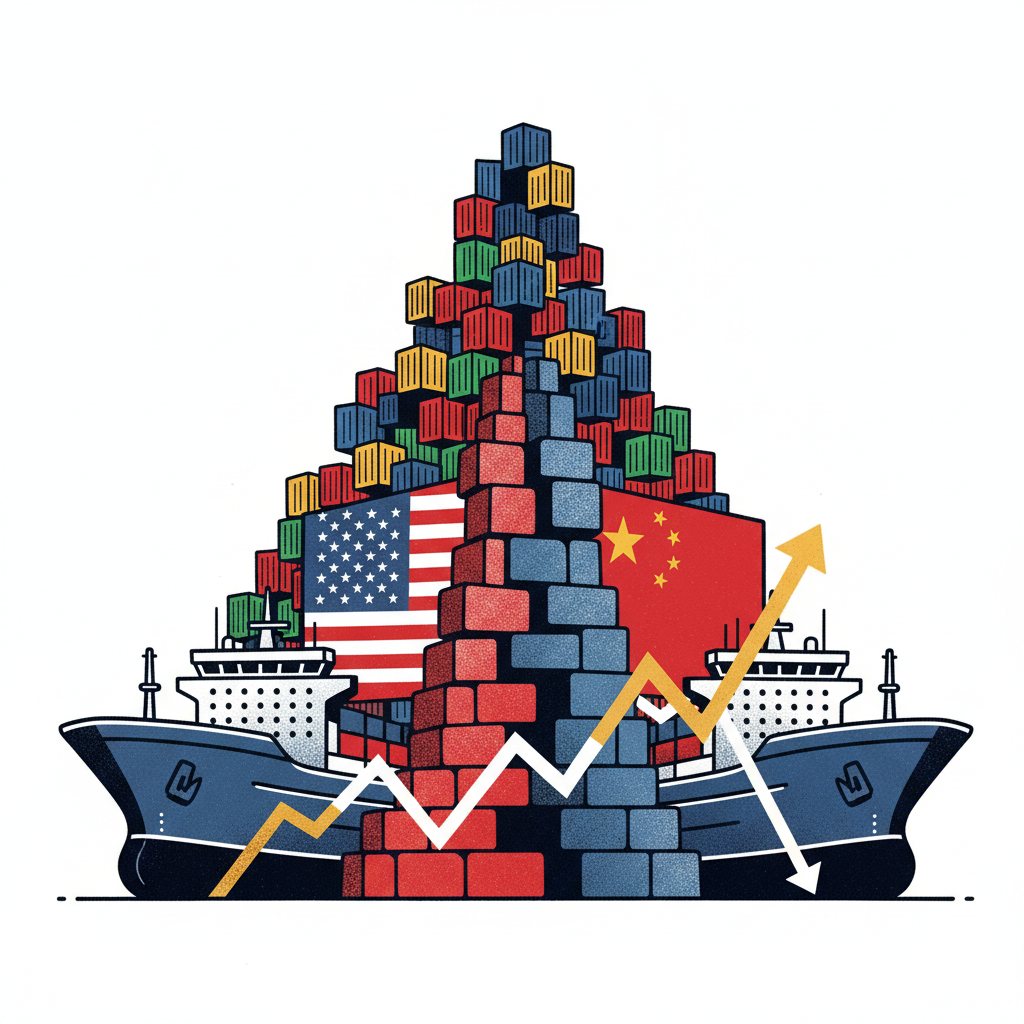
The Evolution of Trade Tensions
The initial phase of the US-China trade war saw the United States impose tariffs on hundreds of billions of dollars worth of Chinese goods, with Beijing retaliating in kind. This era culminated in the "Phase One" trade deal in January 2020, which saw China commit to increased purchases of American goods, though most tariffs remained in place. While direct, reciprocal tariff increases have largely ceased since then, the underlying strategic competition has shifted. The focus has broadened from trade deficits to national security concerns, technological supremacy, and supply chain resilience, leading to ongoing export controls, investment restrictions, and a push for "de-risking" global supply chains away from over-reliance on China.
Evidence from Geopolitical Tracking
Geopolitical intelligence tracking indicates that while the singular "trade war" may have evolved, issues related to tariffs and trade remain highly active. GeoGazet data shows an influence score of 24/100 for this specific conflict, suggesting it is a significant, though not always the dominant, global concern. Further illustrating this ongoing activity, "Tariffs & Trade" is a top connection by signal volume with 82 tracked signals, significantly higher than "China" (38 tracked signals) and "United States" (14 tracked signals) individually, out of a total of 100 tracked events in the GeoGazet graph. This highlights the pervasive nature of tariff-related discussions and policy decisions.
Recent signals confirm this sustained focus:
- One GeoGazet signal, "Trump’s Replacement Tariffs Will Have Unintended Consequences for USMCA," indicates that tariffs remain an active policy tool in US trade strategy, even if not exclusively targeting China.
- Another signal, "Trump's Tariffs, Government Revenue, and the Cost of Living: The Case of Food and the Agricultural Tariff Exemptions," demonstrates the ongoing domestic analysis and impact of existing tariff regimes.
- Furthermore, "US appeals court extends block on ruling against Trump's 10% global tariff" points to the continued legal and political challenges surrounding tariff implementation and enforcement. These signals underscore that trade restrictions and disputes are a permanent feature of current international economic relations, albeit with evolving targets and justifications.
Broader Geopolitical Context
The economic rivalry between the US and China now encompasses a broader struggle for technological leadership, particularly in critical sectors such as semiconductors, artificial intelligence, and quantum computing. The United States has implemented stringent export controls on advanced technology to China, aiming to slow Beijing's technological advancement for national security reasons. This approach is reminiscent of economic containment strategies seen during the Cold War, where strategic industries and technological superiority were central to superpower competition. Both nations are seeking to bolster domestic manufacturing capabilities and secure supply chains, creating an environment of strategic competition rather than a simple tariff dispute.
What to Watch For Next
Observers should monitor several key areas. First, the trajectory of US export controls and investment restrictions targeting Chinese technology companies will be critical. Second, any shifts in US trade policy under future administrations could alter the existing tariff landscape. Third, China's responses, including potential counter-restrictions or efforts to localize critical technologies, will shape the dynamic. Finally, the role of allied nations in either aligning with US restrictions or pursuing independent economic engagement with China will influence the global trade environment.