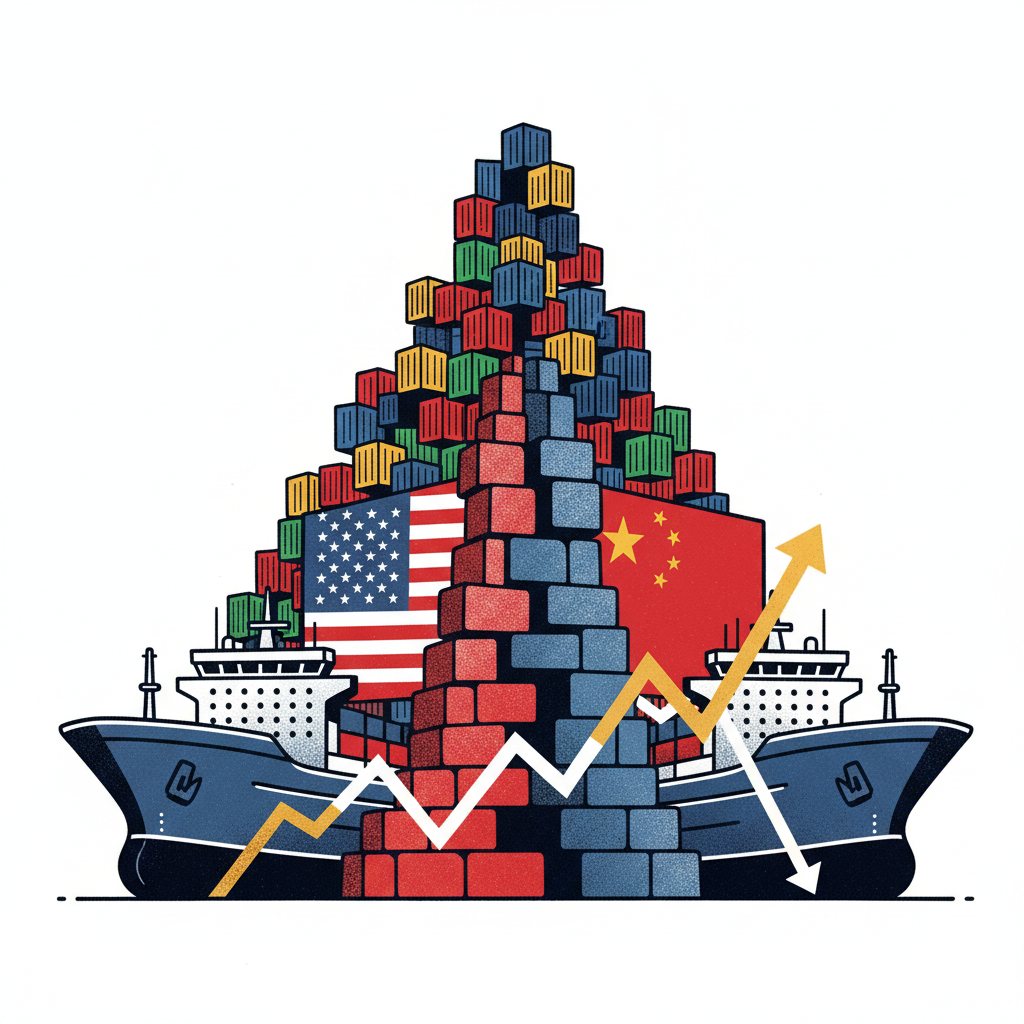
Context of the US-China Trade War
The US-China trade war, initiated in 2018 under the premise of addressing trade imbalances, intellectual property theft, and forced technology transfers, continues to shape the contemporary geopolitical landscape. Despite shifts in US administrations, the strategic competition between Washington and Beijing has intensified, extending beyond tariffs to encompass technology, human rights, and regional influence. GeoGazet tracking indicates that Tariffs & Trade (81 tracked signals) consistently represents the top connection by signal volume related to this conflict, followed by China (38 tracked signals) and the United States (13 tracked signals). While persistent, its current influence score stands at 23/100, suggesting other global factors also weigh heavily on economic outlook.
Global Supply Chain Disruption
One of the most profound effects has been the disruption of global supply chains. Tariffs imposed by both nations have forced multinational corporations to diversify their manufacturing bases away from China, a process often termed "de-risking" or "friend-shoring." This relocation is costly and complex, leading to higher production expenses and, subsequently, increased consumer prices. Recent signals from GeoGazet tracking, such as "Trump Poised to Roll Out New Tariffs as He Refunds the Old Ones," highlight the ongoing political intent to utilize tariffs as a leverage tool, perpetuating uncertainty for businesses reliant on cross-border trade.
Economic Uncertainty and Investment
The unpredictable nature of trade policy fosters an environment of economic uncertainty, which discourages foreign direct investment and slows global economic expansion. Businesses face challenges in long-term planning, anticipating potential tariff hikes or new trade barriers. The internal debates within the United States, evidenced by signals like "US trade official takes aim at Beijing, faults Washington on industry," further complicate the outlook, as companies await consistent policy directions. Historically, prolonged trade disputes, such as those seen in the 1930s with the Smoot-Hawley Tariff Act, demonstrate how protectionist measures can contract global trade and deepen economic downturns.
Broader Geopolitical and Trade Ramifications
The US-China trade war has ripple effects on other major economies and trade blocs. Nations dependent on either the US or Chinese markets find themselves navigating complex choices, balancing economic interests with geopolitical alignment. For instance, the GeoGazet signal "EU leaders weigh tougher measures to combat China trade imbalance" indicates that European leaders are also seeking to address their own trade deficits with Beijing, suggesting a broader, more fragmented approach to global trade relations is emerging. This dynamic shifts global economic power balances and encourages regional trade agreements as alternatives to a truly globalized system.
What to Watch For Next
Analysts should monitor several key areas. These include the trajectory of future tariff decisions from both the US and China, the pace of supply chain diversification into regions like Southeast Asia or Mexico, and the evolution of global trade regulations as major blocs adjust their strategies. The dynamic nature of these interactions is underscored by a total of 100 tracked events in the GeoGazet graph, indicating a continuously evolving situation. Further signals regarding technological restrictions, particularly in semiconductors and AI, will also be critical indicators of future economic decoupling.