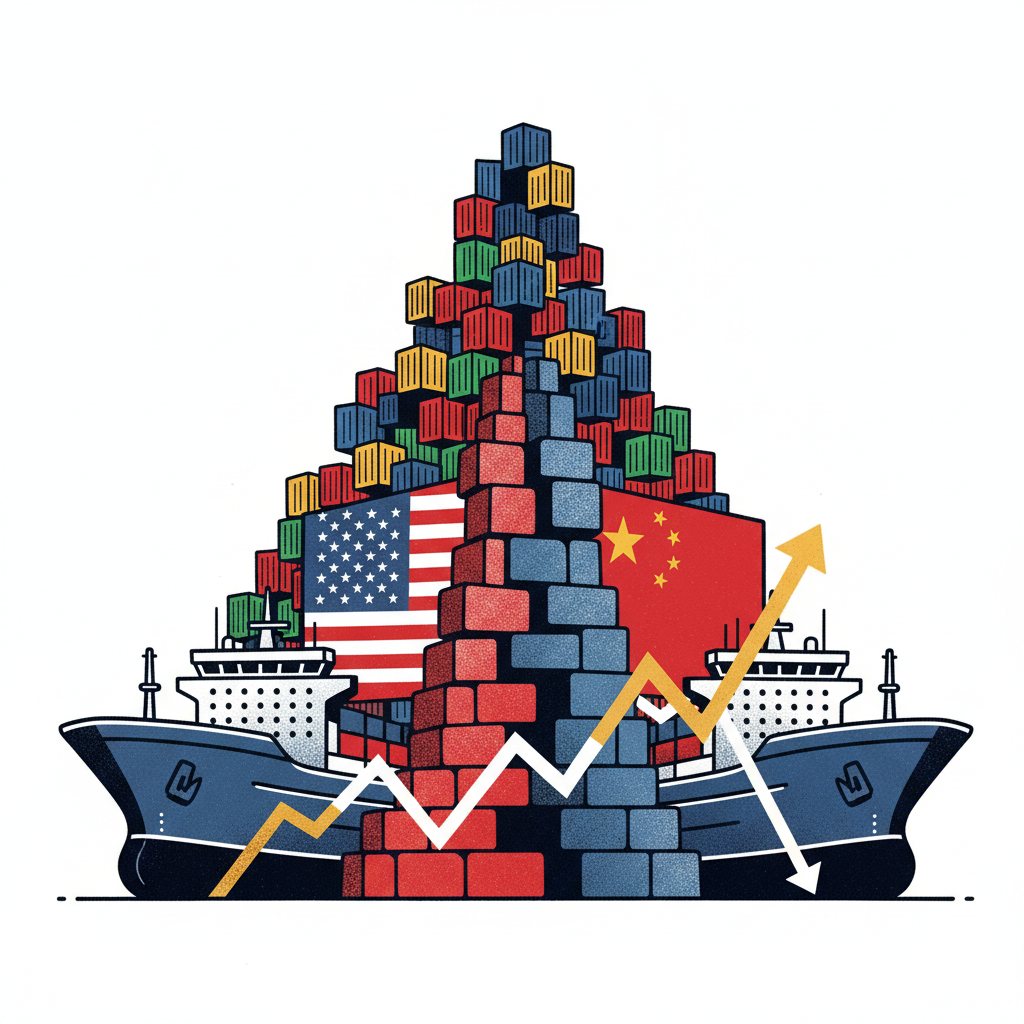
Singapore's Economic Vulnerability
Singapore's economic model is predicated on global trade and investment, making it highly sensitive to shifts in the international economic landscape. The nation serves as a critical node in global supply chains, facilitating manufacturing, logistics, and financial services across Southeast Asia. The US-China trade war, characterized by tariffs and non-tariff barriers, directly impacts global trade flows, subsequently affecting Singapore's port volumes, export-oriented industries, and investment climate. GeoGazet tracking indicates Singapore's current influence score as 15/100 regarding this conflict, suggesting a notable, though not overwhelming, susceptibility to its effects.
Direct and Indirect Impacts
The direct impact on Singapore involves reduced demand for its exports to both China and the United States as their economies face friction and supply chains adjust. Indirectly, the trade war encourages multinational corporations to diversify their manufacturing and sourcing away from China. This supply chain relocation presents both challenges and opportunities for Singapore. While some lower-cost manufacturing may move to other Southeast Asian nations, Singapore, with its advanced infrastructure and skilled workforce, could benefit as a regional hub for higher-value activities, research and development, and supply chain management. However, the overall global economic slowdown instigated by the trade war often dampens investment sentiment, potentially curtailing Singapore's foreign direct investment inflows. The GeoGazet data highlights the intensity of these issues with "Tariffs & Trade" registering 81 tracked signals, "China" 34 signals, and "United States" 14 signals, indicating these connections are central to Singapore's economic calculus.
Geopolitical Context and Escalation
The US-China trade war is rooted in deeper geopolitical and economic competition, including disputes over intellectual property, technology transfer, and state subsidies. Recent signals from GeoGazet tracking underscore the persistent nature of this conflict. For example, "The Trump administration wants more tariffs to combat 'structural excess capacity.' Here's what that means." illustrates the US focus on fundamental economic grievances. Further, "With Iran war cooling, Trump is refocusing on tariffs" suggests tariffs remain a primary foreign policy tool, signaling continued pressure. The legal endurance of these measures is reinforced by "U.S. Supreme Court Declines Review of China Section 301 Tariff Challenge." With a total of 100 tracked events in the GeoGazet graph related to these issues, the ongoing flux in US-China relations requires Singapore to maintain a delicate balance in its relationships with both economic superpowers.
Historical Parallels
Historically, Singapore has navigated various global economic downturns, including the 1997 Asian Financial Crisis and the 2008 Global Financial Crisis, often emerging resilient due to its robust institutions and prudent fiscal management. However, the current US-China trade war differs from previous cyclical downturns; it represents a more structural "decoupling" in critical sectors like technology. This shift necessitates longer-term adjustments beyond traditional counter-cyclical measures, pushing Singapore to diversify its trade partnerships and strengthen regional economic integration.
What to Watch For Next
Singapore will closely monitor the trajectory of US-China trade relations, particularly any new tariff impositions or relaxations. Key indicators include the pace of global supply chain restructuring, the success of regional trade agreements such as the Comprehensive and Progressive Agreement for Trans-Pacific Partnership (CPTPP) and the Regional Comprehensive Economic Partnership (RCEP), and Singapore's ability to attract new foreign direct investment in high-growth sectors. Domestic policy responses focused on workforce upskilling and economic diversification will also be crucial.