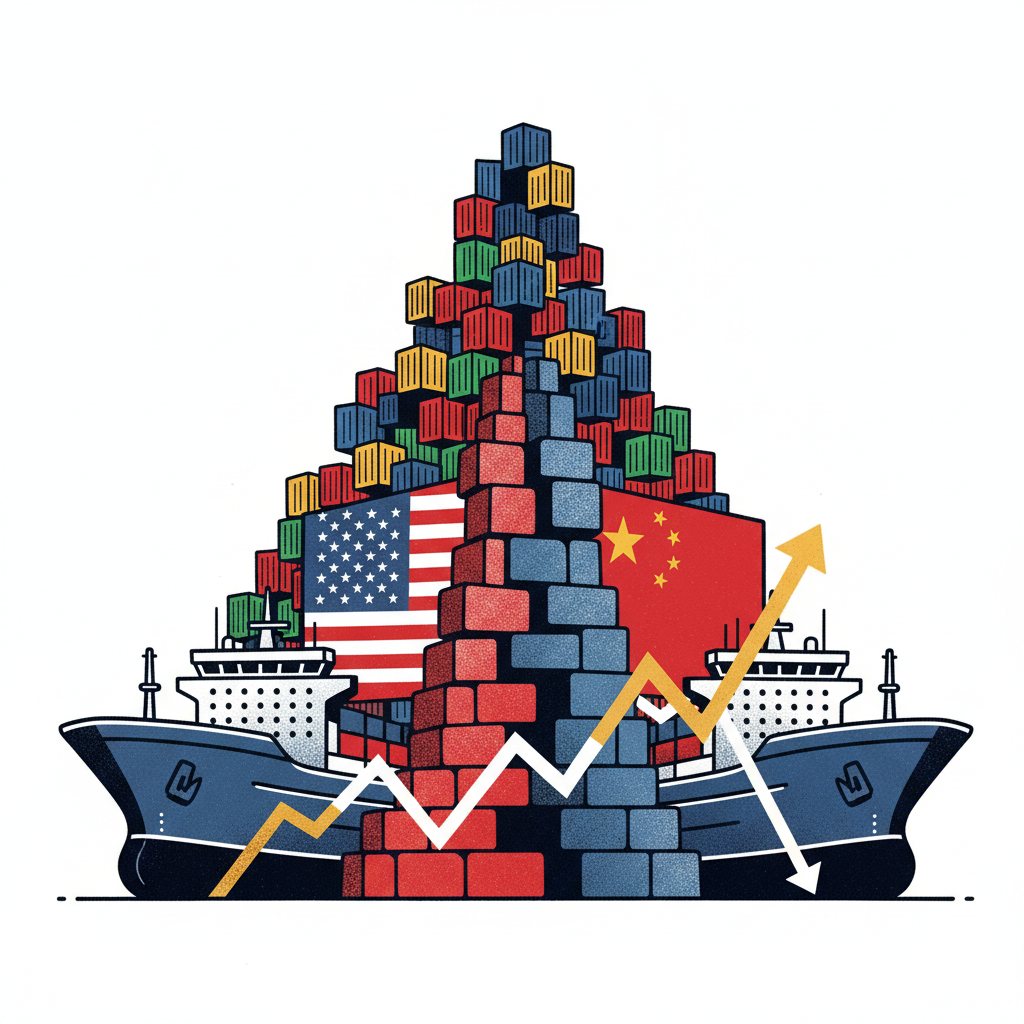
Context of the US-China Trade War
Initiated in 2018 under the Trump administration, the US-China trade war involved the imposition of significant tariffs on hundreds of billions of dollars worth of goods from both countries. The stated goals for the United States included addressing perceived unfair trade practices, intellectual property theft, forced technology transfers, and the substantial trade imbalance. While a "Phase One" trade deal was signed in 2020, removing some tariffs, many remain in place, and the underlying tensions have continued, encompassing technological competition and broader geopolitical rivalry. The current geopolitical landscape is characterized by a drive towards "de-risking" or "decoupling" from China by Western nations, further complicating trade relations.
Economic Impacts and Data Analysis
The direct economic impacts are multifaceted. Tariffs act as taxes on imported goods, raising costs for businesses and consumers, and altering competitive landscapes. This encourages companies to diversify supply chains away from China, a process that is costly and time-consuming, resulting in inefficiencies. The current influence score for this ongoing dynamic stands at 23/100, indicating a notable but not overwhelmingly dominant direct impact on the global economy at this specific juncture, likely due to adaptation and some mitigation efforts. However, the high signal volume for "Tariffs & Trade" (81 tracked signals), "China" (38 tracked signals), and "United States" (13 tracked signals) in GeoGazet tracking underscores the continuous and central nature of this issue in global economic discourse. The "Trump Poised to Roll Out New Tariffs as He Refunds the Old Ones" GeoGazet signal further highlights the potential for renewed or intensified tariff applications, maintaining a state of unpredictability.
Broader Geopolitical Ramifications
Beyond direct economic costs, the trade war has fostered a more fragmented and protectionist global trading environment. The "US trade official takes aim at Beijing, faults Washington on industry" GeoGazet signal points to ongoing domestic and international debates about trade policies, reflecting a broader shift in how major powers view global commerce. This fragmentation extends beyond the US-China bilateral relationship, as evidenced by the GeoGazet signal "EU leaders weigh tougher measures to combat China trade imbalance." This indicates that other major economic blocs are increasingly scrutinizing and potentially adjusting their trade policies with China, expanding the ripple effect of the initial US-China dispute. The total 100 tracked events in the GeoGazet graph demonstrate the persistent and varied nature of these interconnected global trade developments. Historically, periods of intense protectionism, such as those seen in the interwar period of the 20th century, have often led to reduced global trade, economic stagnation, and increased international tensions.
Outlook: What to Watch For
Monitoring upcoming trade policy announcements, particularly regarding tariffs, is crucial. The pace and success of supply chain diversification efforts by multinational corporations will indicate the long-term structural changes in global trade. Attention should also be paid to the evolving trade relationships between China and other major economies, particularly the European Union, which could signify broader shifts in global trade architecture. The upcoming election cycles in the United States and other key nations will also be critical in shaping future trade policy directions.